Introducing New Queen

I’ve finally sorted out the issues with my queen bee (see the drone layer post) and I thought I’d post a few photos of good brood comb, drone-laying queen comb, and a sign that your queen introduction isn’t going well!


Drone cells in centre left. The pattern shown, with bullet-like protrusions surrounded by empty cells, indicates a drone layer. The dark cells around the drone cells contain pollen and are normal.
Normal brood comb: the capped cells are flat and evenly distributed across the frame with few empty cells
Normal brood comb: the capped cells are flat and evenly distributed across the frame with few empty cells

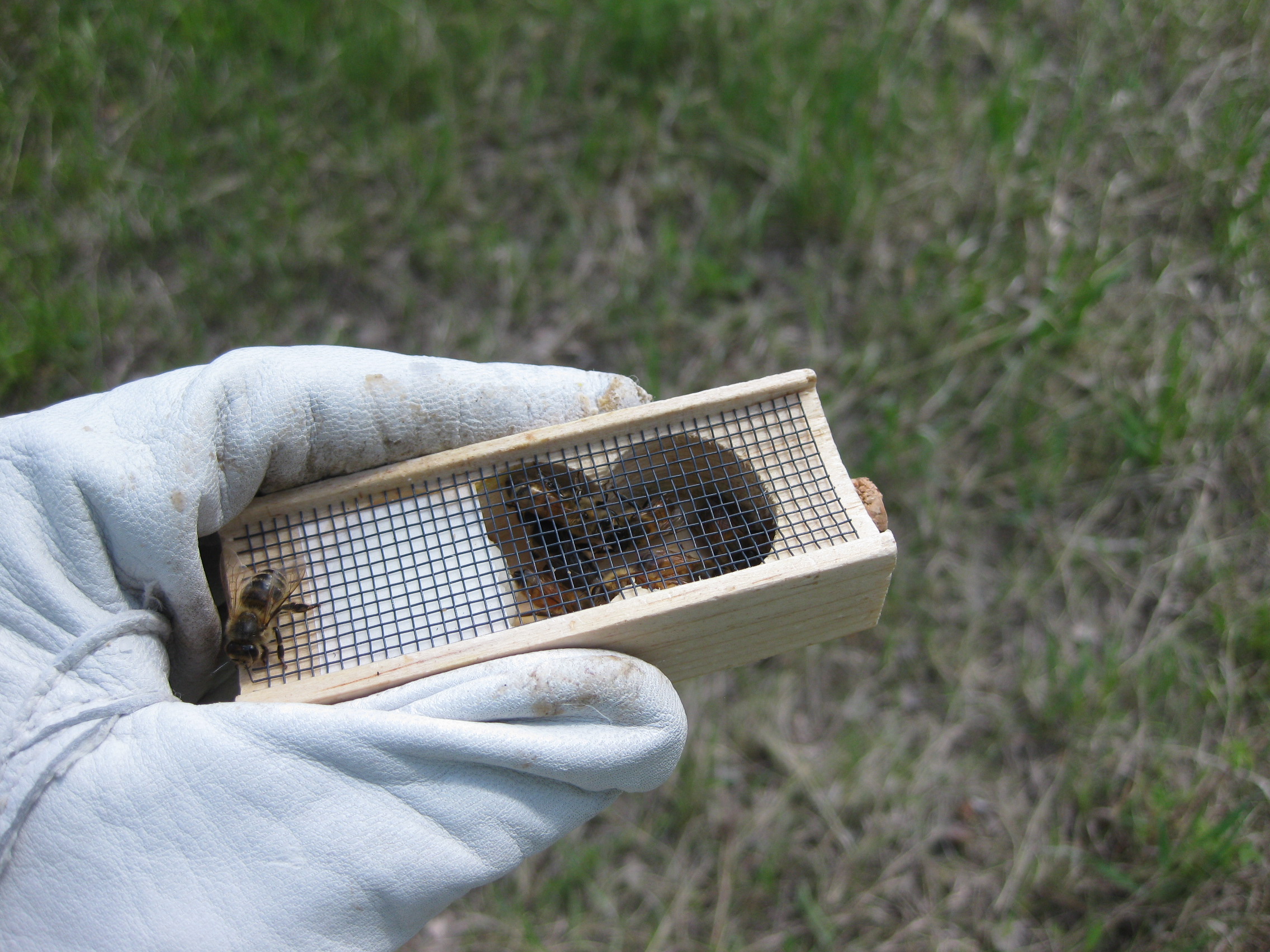
The queen comes in a cage with a few attendant bees. The white on the left is the candy, which the bees eat to release the queen.

Once I killed the existing queen I should have waited three days (72 hours) before introducing the new queen. Taking what the weather was providing, I put my queen in after two days. The queen cage is hung between two frames and the bees are supposed to ignore it. Over the next three days the queen either has the candy plug eaten out by other bees until she can escape, or you need to release her on that day if she hasn’t managed to get out yet. If one introduces a queen too early after killing the old queen, which I did, the old queen’s pheromones haven’t dissipated yet and the bees attack the new queen. This is called balling and you can see it developing in my photos.
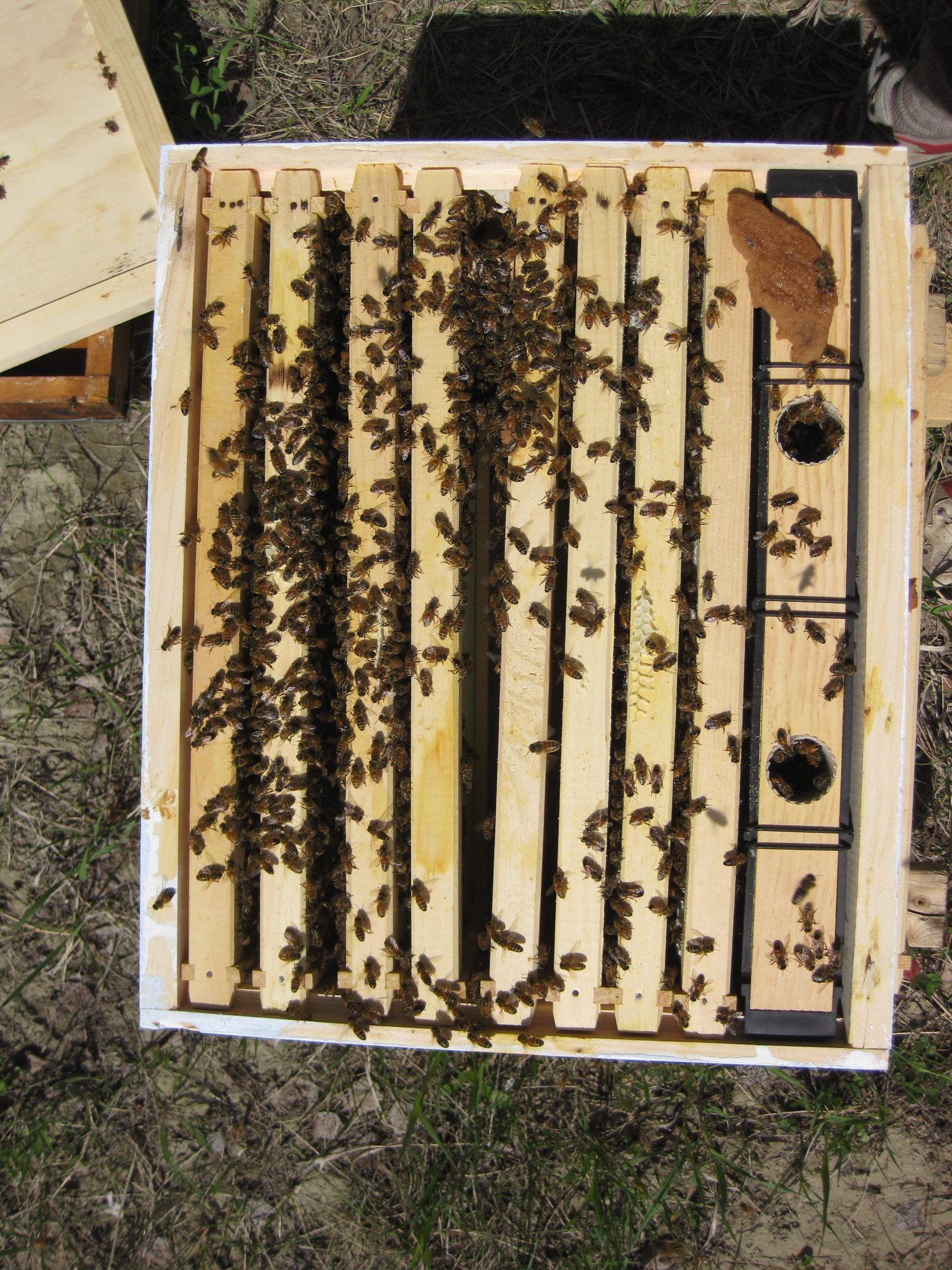
The queen cage is in the upper center, obscured by the ball of bees.

Balling is bad because the bees chew at the queen through the mesh screen of the queen cage and can eat the pads of her feet off. With hollow legs and a circulatory system that doesn’t have arteries or veins, the queen call slowly ‘bleed’ to death with the pads of her feet gone. Grisly but no worries, my queen appears to be fine and happily laying lots of eggs now. Just another demonstration of the precise and time-dependent nature of beekeeping. “Think like a bee” is becoming my new motto!
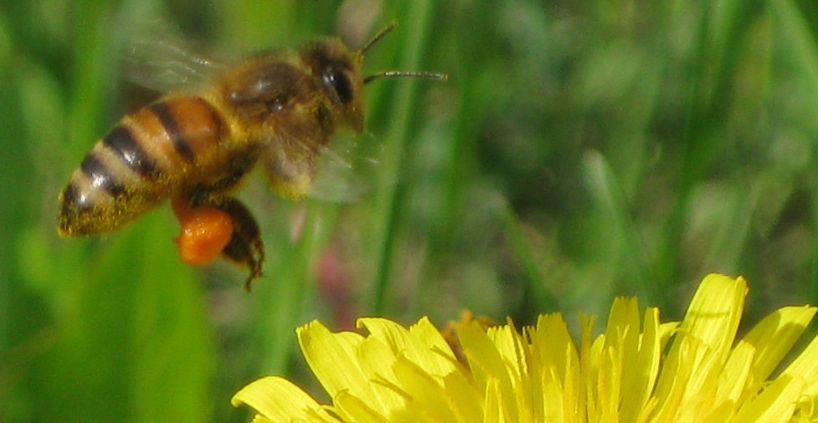
Dandelions are the first major nectar flow of the season.

Drone-laying Queen Bee

Of the two hives we have, one is doing marvelously, with beautiful comb and lots of stored honey and pollen. The other hive has been somewhat of a challenge because it has what is called a “drone layer” or a queen bee that can only lay drone eggs. With a drone layer, the capped brood is lumpy and funny looking and the colony is in danger of dying.

To understand why having a drone layer is such a problem and how queens become drone layers, one needs to know something about the lives of bees. Shortly after a queen hatches, she needs to fly out of the hive and mate with several drones. This provides her with enough fertilized eggs for the rest of her laying life, which can be up to 5 years!

Throughout her life, she can lay either fertilized or unfertilized eggs. The fertilized eggs become worker bees while the unfertilized eggs become drones. Worker bees collect pollen and nector, make honey, and raise the brood or baby bees. Without them the colony dies. Drones hang out waiting to find virgin queens to mate with. You can see which type of bee I would prefer to have.

If the weather is cold when the queen is supposed to be taking her mating flight, she may stay in the hive and miss the breeding window. That means she will not be able to lay fertilized eggs for the rest of her life- she can produce only drones and no worker bees. A colony without worker bees will not last for very long.

And what does one do with a drone-laying queen? One kills it. And replaces it with a new queen who has hopefully successfully completed a mating flight. So that was my sad task the other day. I have now introduced a new queen and I’ll let you know if the introduction appears successful in a few days.

Fenugreek as cover crop

I’m growing plenty of arugula, fennel, and fenugreek this summer, so start looking up recipes! Fenugreek is the experiment. Apparently its maple syrup-like flavour lends itself to being used in maple syrup substitutes. It also has many other medicinal properties in addition to being a spice in curries. I’m growing it mostly as a cover crop but I will be harvesting some as well. There is some thought that fenugreek may be an ideal cover crop because it is an annual that will not become a weed problem, only needs to be cut once at the end of the season, and has a high nitrogen content.  Being a legume from the Mediterranean, it is supposed to do quite well in the prairie provinces where lack of moisture and moderately hot conditions are similar to its native land. Or at least that’s my understanding- we’ll see what happens this summer!

Native Pollinators

In the last three days the trees have blossomed and all the native pollinators are buzzing around. I’m amazed at their diversity; I’ve never paid attention before to all the varieties of wasps and bees! The native pollinators far outnumber my honey bees right now. I’m feeding my bees “nector” and “pollen” in the hive to make sure they don’t starve and so it appears they aren’t out foraging as much as they could be. They’ve already drawn out almost all the foundation I gave them and are busy tending to their larvae. By next week there should be baby bees emerging! I’m hoping the wild pollinators and the honey bees are able to coexist without competition.

The Bees Have Arrived

I got my new honey bees on Monday. On Monday night a blizzard hit, but the bees seem to be doing okay. I’m not sure if the queens have been successfully hived; I’ll be checking for that this Monday.